“Abide in…me!”

Unknown

Today in the Gospel we receive a simple, yet rich description of what it means to be a follower of Christ. When Jesus speaks comparing Himself to a “vine” and calls His followers “branches” He creates a clear picture for us (John 15.1-8); Just as the branch is dependent on the vine for life, as are we dependent on Jesus for real life. The grapevine sends nourishment and food to the branches, which in turn are able to produce abundant grapes. In the same way, when we are connected to Christ, when we “abide in Him” His life flows in us and through us, nourishing us, and the outcome is the fruit of joy and love.

With Jesus’ words, “Abide in me”, He reminds us of the relationship he desires with us and has come to offer us: “Abide in me… abide in my love, as I abide in you”. This is an intimate invitation. He invites us into a union with himself, but look at the word he uses: IN. This isn’t a relationship between merely friends. The only relationship I could think of would be that of two lovers, but in a deeper, more profound, way. Just as the vine and the branches are intricately connected, one seamlessly flowing into the other so that they are essentially one. So through our union with Christ what is true of him becomes true of us. By the work of the Spirit, Christ lives in us and we in Him, and we partake of all his riches.

vine-and-branches But what does, what should, this abiding relationship look like? As we hear about in St.John’s letter (1 John 3.18-24) it should be lived out of an obedience to God’s commandments and a love that is expressed, not in our words, but in our actions. It is a decision that we are faced with on a daily basis and that we express through our actions and our choices of what we make a priority in our lives. It is a coming to a point of recognizing our full dependency on Him, a dependency that begins anew in every moment of our lives.

These words spoken by Jesus, “Abide in me!” are obviously important, as they are repeated several times in this short scripture passage. This is what Jesus has come for. And why he is speaking with such imagery. So that in a way we could get a taste, or some slight understanding, of His love for us, and the life He offers us. These words seem simple yet are so profound. Perhaps the words of St.Paul shed light on this for us, “I have been crucified with Christ and I no longer live, but Christ lives in me. The life I live in the body, I live by faith in the Son of God who loved me and gave himself for me.” (Galations 2.20) His deep love for us calls us to live in that love, and live out that love in our daily walk with Him.

Sounds really great! But how do we do this? How do we abide in Him, in His love. To go back to the imagery of the vine and the branches; to abide in Him we need to be receiving life from Him(as the vine) by being intricately and intimately connected to Him(as the braches) receiving His nourishment. Christ needs to feed us and fill us, and He has given us many ways:

  • He has given us the Bible; Sacred Scripture. If we are to abide in Him we need to know firsthand what truth and life He is speaking to us, and the Bible is His word to us, spoken for us. Through His Word He offers us consolation, truth, and guidance.
  • In response to God’s Word we must also go to Him in prayer, not only with our needs, but with open hearts to receive. This was the constant practice of Jesus himself. He recognized his own dependence on the Father and his life of prayer was a visible expression of that dependence.
  • In order to abide in Christ we are also given the sacraments; this is where the truth of our union becomes tangible and visible. In baptism we die by going down into the waters and come out a new creation in Christ. In order to abide in Christ, the holy one, we need to be rejecting sin and seeking to live holy lives, so we have been given the Sacrament of Confession that we may continually return to the Father’s love for us and grow in obedience to His commands. Furthermore, through the Eucharist, Christ becomes the true sacrifice for us, entering into our humanity and uniting himself to us as we physically receive him as our spiritual nourishment.
  • The sacraments further point us towards the importance of our fellowship with our spiritual community, the Church, as a means by which we experience our union with Christ. The Church is the body of Christ, and through our interaction with one another we engage and interact with Christ himself. We can receive His comfort, encouragement, and guidance through others within His body.
  • We further hear that “every branch that does bear fruit he prunes to make it bear more fruit.” In this way suffering also plays a part in us letting go of our attachments and earthly desires in allowing our lives to be shaped and united in the suffering of Christ.

Our union with Christ, this “abiding” relationship, is indeed a mystery; something not easy to grasp or explain. And so I would like to conclude with the elucidating line from St.John’s letter: “By this we know that he abides in us, by the Spirit he has given us.” (1 John 3.24) So it is by the work of the Holy Spirit that we are united with our Savior and experience life with and in Him. Let us draw strength then from this reality and entrust ourselves fully to Christ that, as branches, we may draw on the vitality of the true vine, Jesus Christ, to produce good fruit; fruit that is life for us, fruit that is life for the body of Christ, fruit that is life for our community, and fruit that is life for the world.


Unknown-1

Don’t you recognize me?

In the opening lines of the Gospel today(Luke 24.35-48) we hear about the 2 disciples who had been on the road to Emmaus, and had encountered the risen Jesus, sharing their experience and, I’m sure, their excitement and joy at this meeting.

You could probably picture their faces when Jesus all of a sudden appears; startled and frightened, they thought they were seeing a ghost.

I was particularly drawn to how Jesus was trying to convince the disciples that he is real, that it is indeed Him. He invites them; “Look at my hands and feet… Touch me and see,” and, “Do you have anything to eat?” It is in these small and simple gestures that Jesus invites them to recognize Him. We may wonder, “Why would they not have believed?” Especially when they had heard that this was what was to come, in Jesus’ own words, and when they had seen first-hand all that he had done!

We are also faced with these same moments in our own lives, moments where Jesus appears to us and He invites us to recognize Him. Quite honestly we can also be caught off guard, like the disciples were, and have a hard time recognizing Him. But He calls us to; recognize Him in our spouse, to recognize Him in our family members or our friend, to recognize Him even in a stranger. It’s not always easy to recognize the face of Christ, especially when He comes to us through someone who has hurt us, someone who we see is not making good choices, or in someone whom we don’t get along with. Sometimes we can be blinded by our own pride, like the crowd and the Pharisees were to Jesus, while other times it can be our selfishness.

But Jesus understands His disciples disbelieving. They had joy even though they doubted. And He called them to look outside of themselves, outside of their inner doubt. They were open to Him, and in turn He opened their minds and their hearts to see. It is not something that we can simply grasp with our own human understanding, that Christ suffered and rose from the dead to forgive our sins. But through His invitation to us we can open ourselves to encounter Him in others and He can open our minds to understand this great mystery, this reality of His great love for each of us.

Let us come before Jesus with hearts open to His love, open to His presence, open to His resurrection in our lives, because when we come to Him with openness He responds, not holding back but revealing the truths of His life and His love for us. Let us take up our invitation to be witnesses to these things in our lives and seek to recognize Him in all that we do and in whomever we meet today, travelling on this road to new life in Him.

1-54


Stare at the 4 black dots in the centre of this picture for about 15 seconds.

Close your eyes and keep them closed until an image appears.

What did you see?

He is here!

Easter is here. Christ is risen. We have journeyed through the desert of Lent, through temptations and the reality that our failings and shortcomings have put Jesus on the cross. And now throughout this season of Easter we celebrate the victory He has won for us through His resurrection.

In the Gospel today(John 20.9-31) we hear about Jesus appearing to His disciples who were, in hiding in a closed room, afraid of what would happen to them. Amidst their doubts and fears, probably amidst their guilt for not having done enough to prevent Jesus’ death. Amidst the sorrow of losing their close friend and teacher they had the doors shut, for what security and safety they could get. All of a sudden Jesus came and stood among them. He entered into their doubts and fears, their sorrows and guilt, and brought His peace. He greeted them twice, “Peace be with you,” and they were filled with joy.

How often in our lives do we settle in our sorrow, our guilt, or allow our fears to close us up. When we are hurt we close our hearts to others, but also sometimes to the Lord; Jesus, who wants to bring us His peace.

This scene that we see in the Gospel is also that of the beginning of the Church. With his disciples gathered in the room Jesus sends them out and commissions them, with peace, “Receive the Holy Spirit,” inviting them to receive life in Him through the working of the Spirit and to share that life with others. Jesus also calls us to receive His life, His Spirit, which empowers us to be His life to the world: “As the Father has sent me, so I send you.”

Further to this we see, in the first reading(Acts 4.32-35), the early church in action, the gifts and blessings received by each being shared with all. “There was not a needy person among them.” We see this same model in families(parents giving to their children and children contributing their joy and unique gifts), and I also see this model as a large part of your culture, the native culture, that all are cared for and supported by one another(I witnessed this example recently having a community meal after a funeral with one clan cooking & helping with the needs of the other clan). The church’s idea, as we see in scripture, is that all would be ‘of one heart and soul!’

This idea of community, “church”, is affirmed by something greater than us, as we see Thomas’ response to Jesus’ appearance: “My Lord, and my God.” This is a profound response of faith, Thomas’ belief that Jesus is God; If Jesus is truly here, back from the dead, then all that He has said about Himself and everything He has claimed to be is true. We see the Spirit at work, always leading to the truth. This is the Church’s foundation.

The Lord comes among us here today as a community of believers, and whether we come with our fears, sorrows, guilt, or hurts, or whether we come seeking to be filled with faith and truth and peace, Jesus breathes His Spirit upon us, filling us with His life. He invites us through this intimate encounter(as He did with Thomas, “Give me your hand, put it into my side.”) to the experience of His Church(His body), to receive the unique gifts He has for each of us and, not to hold on to them for ourselves, to share those gifts with others!

Holy Thursday

As we reflect on the readings from our celebration this evening we see Jesus’ actions in 2 key areas:

  • The Institution of the Eucharist, and
  • The Washing of the Disciples feet

The Institution of the Eucharist, which we hear about in Paul’s letter to the Corinthians(1 Cor. 11.23-26), is the fulfillment of the Passover meal, which we hear about in the book of Exodus(12.1-8, 11-14). Just as the firstborn of the Israelites was spared by the blood of the Passover lamb, so Jesus is for us as baptized Christians the Passover lamb who saves us, for all time, from the death of our sins. He draws us into eternal life with him, by his sacrifice. In the words of Pope Benedict, “The Institution of the Eucharist demonstrates how Jesus’ death, for all it’s violence and absurdity, became in him a supreme act of love and mankind’s definitive deliverance from evil.” –Sacramentum Caritatis

This is what we celebrate every time we partake of the Eucharist. Jesus gives His body, as the priest speaks(in the person of Christ), “This is my Body that is for you. Do this in remembrance of me”, “This cup is the new covenant in my Blood. Do this as often as you drink it, in remembrance of me. For as often as you eat this bread and drink this cup you proclaim the Lord’s death until he comes.” This is the Institution of the Eucharist; the Last Supper, the first celebration of the Holy Mass.

Just prior to this Last Supper Jesus actually washes the feet of his apostles(John 13.1-15). He is on the dusty, dirty floor with a basin, a bowl, water, and towel. He washes what would have been the dirtiest part of a person, in those days. They would have walked across dirt and sand long distances in sandals. The Son of God washed those dirty feet, taking the place of where a servant or slave would have been instructed to be. The apostles would have been stunned at this act of humility and condescension, when it was proper that they should have washed his feet.

We live in a culture today that is very ME focused; what do I need? I will do what I want and I desire. I will do what feels good for me.

How do we flip this culture to what Jesus is trying to teach us in the gospel? It will take a changing of our perspective, our expectations, and our attitude. Jesus’ attitude of servanthood was in direct contrast to that of the disciples, who had recently been arguing among themselves as to which of them was the greatest(Luke 22.24). Since there was no servant present among them it would have never occurred to them to wash one another’s feet.

It is by Jesus’ washing of the disciples’ feet that he calls them, into his priesthood, to do the same for others and to be servants of all. His call is also for us, “I have given you an example, that you should do as I have done to you.” How do we practically do this as his followers?

[As parents we do this often when we help our child when it is not easy. As workers we do this often when we drop our ego and give credit to someone else’s good idea. When we reach out to a co-worker we may not care for and talk to them. When we smile and offer a helping hand. As strangers we do this often when we smile at a stranger, offer to help carry something for them or help in any way.

As children of God we do this when we help the least of our brother and sisters. When we do something that we don’t want to but know it will help someone else, when we put someone else’s needs before our own.]*

We can wash another’s feet but we have to change our focus, to be centered on others rather than centered on self. We can start today, by finding one way to wash another’s feet, then two tomorrow, and three the next day. It will become easier as we grow and, even if it means getting dirty or uncomfortable, we will learn this beautiful lesson Jesus was trying to teach all those years ago.

*[Practical suggestions for washing others’ feet adapted from Theresa Vogel]

“This is my Son.”

I wonder what it would have been like for the three apostles, Peter, James, & John, as they encountered the transfiguration of Christ (Mark 9.2-10). Jesus, whom they had been with for a couple of years, whom they had walked and talked with as they would any friend, and now He is transformed into His heavenly appearance. They catch a glimpse of His divinity. A foreshadowing of what is to come. It really floored them, and actually terrified them. They didn’t know what to do or say. They were blessed to receive this amazing experience, this awe-inspiring moment, and what did they say, “It is good for us to be here, let us stay here like this for a while.” I could really relate to this, and I’m sure many of you here may have had similar moments, where God has granted you a moment of joy in prayer, satisfaction or reassurance in your friendship with Him, or just a sense of peace and comfort in His love for you. It wouldn’t have mattered where you were, necessarily, because you were transported, if for only a moment, to this mountaintop. It is good to be in these moments, and God gives these to us as a foretaste of what He has in store for us, eternally.

As we see the apostles in today’s Gospel encounter this foretaste of God’s heavenly kingdom we are also reminded that these moments do not last forever, at least not here on earth. This reminder that we must come down from the mountain leaves us with the reality of going back to our struggles within family life and within ourselves in our daily routines. God doesn’t leave us to our own devices though. And this is very important to remember. God doesn’t speak in scripture, in the New Testament, very often so what He speaks to us from the cloud must be quite important; “This is my Son. Listen to Him.” “This is my Son.” In our struggles; “This is my Son.” In our daily tasks and routines; “This is my Son.” In our doubts and our fears, “This is my Son.” When we are seeking answers, “This is my Son.” God has sent His Son as THE answer. He hasn’t sent us some philosophy, or any other intangible thing, but a person; His Son.

We see in the readings today the blessing we receive when we trust in God (Genesis 22.1-2, 9-13, 15-18), as the answer to life’s questions, that He does not hold anything back from us when we choose Him (Romans 8.31-35, 37).

Jesus Christ is His answer.

But is HE YOUR answer?

Yes, we’re all here at church so that says something, but is He truly your answer? Our lives should look different if He is our answer. He doesn’t want to merely be an interruption in our schedule on Sundays.

Let’s seriously ask ourselves today; “Is Jesus my answer?” Beyond our words, beyond our actions, do you believe with the depths of your soul that He is your answer. If you don’t know for sure ask Him! He has shown Himself to us today in the Gospel, that He loves us so much that He doesn’t want us to settle for anything less than the fullness of His friendship. The good feelings will pass, but when they pass, how will you answer? We have the opportunity to receive Him today, to say with our words, and our action of receiving him, “Amen. I believe you are my answer to life, live in me.” He comes down in vulnerability and humility, where Heaven meets earth, in the form of a small piece of bread, in His flesh given for us.

The truth is, it isn’t easy! We are actually promised crosses in this life, but we are also promised resurrection. In our friendship with Jesus, if we are willing to affirm that He is our answer, He leads us down from the high mountains and walks with us to Calvary, where He teaches us to love HIM, not just His gifts (the good feelings), to give of ourselves, and to store up our treasure in heaven.

Let us take with us today God’s life-changing invitation to us: “This is my Son. Listen to Him.”

Journey through the wilderness

Good news can sometimes be hard to find these days. We turn on the news; we hear of unrest, violence, division and conflict. In our community; we see others, or even ourselves, suffering from sickness or death, struggling with hardships & temptations. Sometimes the bad can feel overwhelming, and it is usually the bad, or the most debilitating situations or stories, that are brought to the forefront.

In the Gospel (Mark 1.12-15) we hear about John the Baptist being imprisoned, what horrible news, and for proclaiming the coming of Jesus. We hear of Jesus in the wilderness, facing temptations. Sounds tough and hard, to me. The important thing to remember is that the gospel reading doesn’t end there! Jesus arrives back on the scene proclaiming “Repent and believe the Good news.” Believe the Good News? What Good News? We are reminded that in our brokenness, in our sinfulness that has caused all this strife, all this bad news, because our actions do affect our neighbor, we need to turn back to God.

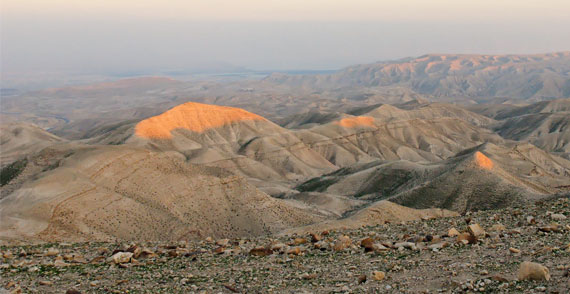
Judean-wilderness-at-sunset


And that is why Jesus is here to remind us. We are reminded of why we are here; the Good News, the great plan that God has for us, to be with Him, and the whole reason why He sent us His Son. NOW, the people of Jesus’ day would not have seen as clearly as we can this connection of God’s coming kingdom, but WE HAVE the blessing of this beautiful knowledge of what Jesus brought for us.

I found this gospel reading so fitting, on this 1st Sunday of Lent, as we have only just begun our Lenten journey. The gospel summarizes what our journey will involve, a trekking through the wilderness of temptation, through our inclinations to take the easy path, or to escape, instead of embrace. It is a wilderness that helps us to draw out of ourselves, to come to a realization and strengthening of our purpose, as it was for Jesus.

SO IT IS, that we start our journey, not with a focus on the bad, on the harshness or the difficulty of it, BUT a focus on the finish, a focus on where we will end up, hopefully being able to discover and more fully live our purpose. There is hope. This is GREAT news.

AND we see it further spelled out in the book of Genesis (9.8-15), our first reading. God makes a covenant with Noah and ALL his descendants, THAT’S US, a bond initiated by God with His people to preserve them from death, to give hope. We see this message come to a pinnacle as we hear St.Peter (1 Peter 3.18-22) teaching that Jesus Christ, God’s only Son, sacrificed Himself for us, once and for all, opening a way to the Father, bridging the chasm, that sin created, and opening a path for us to the Father for all time.

“The kingdom of God has come near. Repent and believe the Good News.” These are Jesus’ words in the Gospel. This is our call. This is our purpose. Amidst the troubles and struggles of our daily lives Jesus Christ reminds us that there is a light at the end of the tunnel. He brings to us all that we need. He teaches us and leads us. He journeys with us, as we hear in the Psalm, “on paths of love and faithfulness.” (Psalm 25) Paths that lead to the hope and the joy of Easter, to all who are willing to make the journey, to an opportunity of life with Him, forever!

Suffering In A Field Hospital

Recently I stumbled across a quote from Pope Francis, speaking on a role of the church in our healing. I found it to be quite pertinent to the theme of the scripture readings today, and so I would like to share it with you as I begin this reflection. The Pope says:

“I see clearly, that the thing the church needs most today is the ability to heal wounds and to warm the hearts of the faithful; it needs nearness, proximity. I see the church as a field hospital after battle. It is useless to ask a seriously injured person if he has high cholesterol and about the level of his blood sugars! You have to heal his wounds. Then we can talk about everything else.”

Suffering and brokenness are something in this world, in our lives, that are inescapable and inevitable. We all must, and will, deal with it at some point, hence I believe why Pope Francis speaks about this great need for healing; that the church is like a field hospital after battle.

Unfortunately we are not perfect. As a result of the original sin of Adam and Eve we all have a tendency towards sin; to that which separates us from the love of our Creator. Fortunately for us, though, Jesus has come to bring us back to God, to guide us back to our Father. We see this in the Gospel of Mark (1.29-39) as He heals the sick, and those possessed with demons.* This is where Jesus starts, with healing. And we see how healing is a journey, an intimate journey. Why is it intimate?

Firstly, because we are called to suffer through our brokenness, facing the reality that we are not perfect, on a very personal level. Secondly, because we are led; we are not called to make this journey by ourselves. We see two examples of this in the Gospel. The first is Jesus healing Simon’s mother-in-law. Jesus lifts her up; a physical sign of guiding her and healing her through a helpful movement. He could have just spoke the words “get up”, but He goes another way about it. The second example of being led to healing is Jesus curing many who were sick with diseases and possessed with demons. In this situation the disciples physically went out and brought them to Jesus. Those in need of healing were guided by the intervention of those who cared enough to lead them to be able to experience healing.

So we see not only that Jesus invites us to experience healing, but that we can also play a vital role in inviting others to experience healing and sharing in that experience with them. It is truly a journey and, as we can see, not one that is meant to be taken alone. In Paul’s letter to the Corinthians (1 Cor. 9.16-19,22-23) we hear St.Paul as he shares how he is obligated as one who has experienced freedom to be that for others, that he would be able to share in the blessings of the Good News of Jesus Christ.

Sure this sounds great, but perhaps a bit ideal. You might be asking, “How can I practically do this?” Again, the Gospel sheds light on this important area. We hear about Jesus “in the morning, while it was still very dark” getting up and going to a deserted place to pray. This is after being up, probably late into the night, as the whole city had been gathered at the door of the place where he was healing. Has this ever struck you? Jesus is perfect; the Son of God. Yet over and over in the Gospels we see Him take time to be alone with His Father.. He had to get up early to make time for it. Sometimes He had to stay up late in order to make time for it, but He always did it. If He who was perfect needed prayer in order to fulfill His life’s mission what does that imply for us who are so wounded and weak, so imperfect. So it is that this needs to be our foundation in experiencing true healing. Jesus wants to be our first companion on this journey. One thing we should not lose sight of is our life’s mission, for without it we can be tempted to despair, as we see in the book of Job (7.1-4,6-7). Job was caught up in the despair of his suffering as he shares with his friends that he has lost hope, “that he will never see good again.”

It should be a great comfort to us to know that Jesus went down this road, of suffering, and went down it to the end. He wants to be our first companion, and shows us that though this path leads to the cross at Calvary it does not end there, and this is our hope, our life’s mission; Easter. For us, as Christians, suffering becomes an opportunity to share in Christ’s passion in the hope of sharing His Easter victory.

Let us take with us today the remembrance of the journey to healing that we are on, and as we come before our heavenly Father, in this celebration, let us seek a more intimate and personal encounter with Him that we may be strengthened with His love and with hope for that journey.


*In the sciptures we hear about physical and emotional healing, as well as spiritual healing. I believe, even though they can be totally separate, that they can also be intricately linked. That, for example, the person being healed would not only experience physical healing alone, but a ‘nearness’ to spiritual healing(like a heart and mind coming into focus) and vice versa; that a person healed spiritually would encounter physical newness.

Leave behind your nets and…

In Mark’s Gospel we hear about Jesus walking along the beach and inviting His future apostles to come and follow Him. I’d like to share with you a short reflection, which really spoke to me;

“From St.John’s Gospel we know that Jesus had already met and spent time with the four apostles whom he calls so suddenly in this passage. It’s important to keep this in mind: far from unexpectedly demanding an irrational abandonment of family, career, and previous plans, Jesus built up a relationship of mutual knowledge and trust before he invited Peter, Andrew, James, and John to become His full-time disciples.

Likewise only as we cultivate a true friendship and an intimate and ongoing exchange of hearts with our Lord will we be able to hear and heed his call in our life. This is not a God who demands blind obedience to his awesome power; this is Jesus Christ, true man, who meets us right where we are and walks along the shore of our lives, who wishes to get to know us, to spend time with us, and to call us by our names. This is a Lord and God who wants our friendship, so that he can share his life with us.” *(taken from ‘The Better Part’ p.347)

This reflection speaks so closely to my heart: “…as we cultivate a true friendship and an intimate ongoing exchange of hearts with our Lord we will be able to hear and heed his call in our life.” In my own life I can look back and recognize many of these moments. I would like to share one such example with you today; why I (along with my family) am here (in Telegraph Creek) today. I share this, not out of a self-righteousness (that I am so close to the Lord) but, from the joy of my heart and to give glory to God for how he has worked in my life, and in the life of my family, and how he can work in all of our lives.

Denise and myself first felt God pulling us to serve as missionaries, about 6 years ago, after hearing a priest share about the northern Catholic missions and the shortage of priests (and even the lack of a spiritual presence) in many of these remote locations, even within our own province. As we thought and prayed about this we came to the realization that our family was our first missionary territory; that we need to be rooted in love and hope in order to share that with others. We joined a group of other like-minded people; seeking to enter into the heart of Jesus. We felt a continual pull to the idea of reaching out to others in a remote community, but we continued to wait on God’s timing.

Reading the line from Mark’s Gospel, “…[James and John] left their father Zebedee in the boat with the hired men, and followed Him”, struck me today as I read it, because this was much of my experience. Being involved in the family business, I almost literally dropped the “net” and followed. This was my biggest struggle. It was a “net” that I had a hard time letting go of and giving to God; “Should I leave the family business high and dry? What about my future in the family business? How would we provide for our family, and meet their needs?” It came to a point where I/we had to open myself/ourselves to a deeper trust in God’s plan. This decision led us to a point where we told the Bishop, of the Catholic Diocese of Whitehorse, that we would go wherever the greatest need was. This symbolized, especially for me, a letting go of that “net” of control and of our own plans. Moving to Telegraph Creek was also the first time we had ever been there, but what a glorious abandonment.

Our time here has already been filled with so many blessings; everyone here has been so generous and hospitable, we feel welcomed as a part of the community, we have had more time to spend with our children, and God has provided so much for us financially. We feel that the biggest blessing is being able to serve others and to be a witness to God’s love for us, as our ‘job’. I am, we are, in no way perfect, but continue to be open and active in my/our relationship with Christ, that He may transform my/our heart/s.

In sharing this I realize that we are not all called to serve in the church, as Denise and myself are, but in our relationship with the Lord He leads us to where He needs us. It is through this relationship with Christ that even something as simple as a smile or a “hello” can be ways of bringing Him to others.

I would encourage you today, even right now, to take a look at how you have been led through your relationship with God, or maybe you haven’t; either way, take some time to sit with this scripture passage (Mark 1.14-20) and envision yourself as one of the apostles, sitting in the boat, as Jesus asks you, “Come follow me.” And think about what nets you are being called to leave behind for Him.

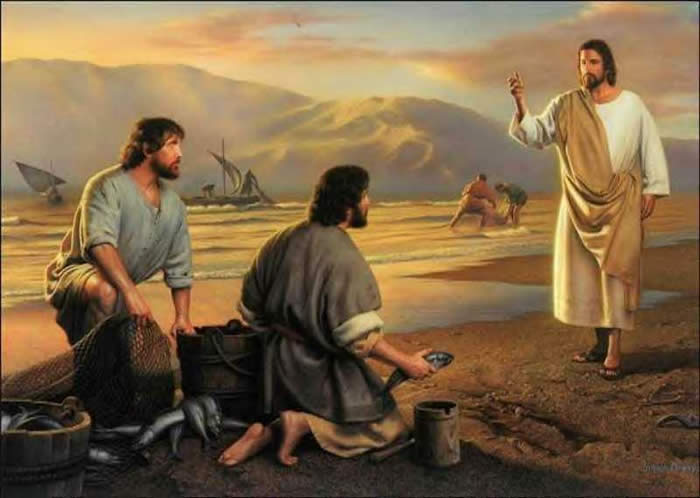
come-follow-me

The scripture readings for today;

Jonah 3.1-5, 10

Psalm 25

1 Corinthians 7.29-31

Mark 1.14-20

…remind us that God wants to be a part of our lives, He can work amazing things when we are open to Him, and He is never very far away.


*Excerpt taken from: “The Better Part: A Christ-centred resource for personal prayer”, by John Bartunek

Difficult Journey

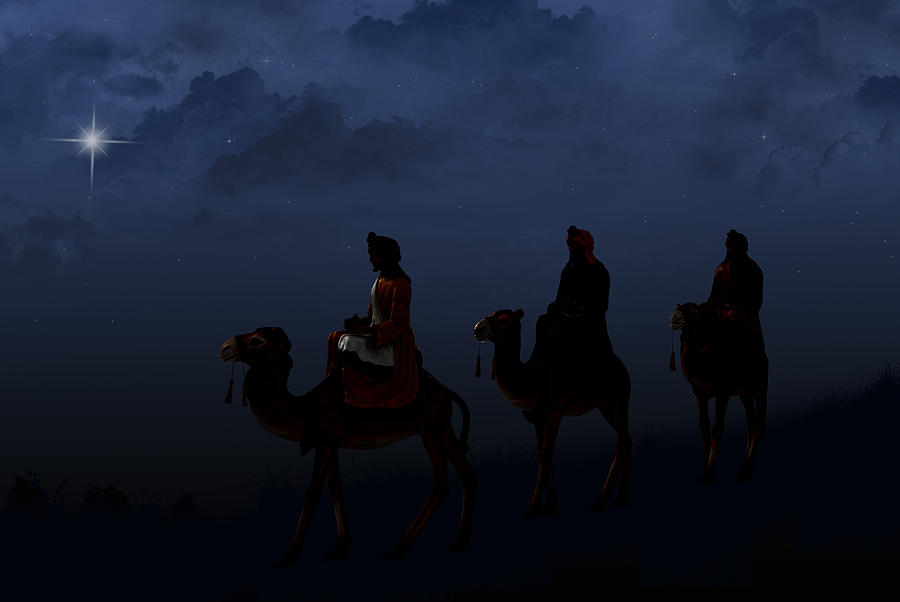
three-wise-men-maria-dryfhout

Christmas brings out the generous spirit in people. Partly, gift-giving is a natural way of celebrating, but I also see it as a supernatural response to God’s gifts to us. It seems to me that at this time of year we are particularly aware of all our blessings, and we are reminded of the greatest gift, Jesus Christ, the dawning brightness that the ancient prophets longed and hungered for, as we hear in the book of Isaiah.

In the gospel of Matthew we are reminded, by the actions of the wise men, how great this gift truly is. Bearing their gifts to Him, the wise men paid homage to Jesus. They made the sacrifice of a dangerous journey, using their knowledge of the stars to find the way, and they gave Him gifts that were precious and sincere. The wise men’s response is profound and enlightening, and begs a crucial question from us: what is your response to Christ?

The story of the wise men from the East shows us three very different responses, or attitudes, towards Christ. The one we choose will determine the path our life will follow.

The first path is fear. This is King Herod’s response. He fears the loss of the throne to a rival king. He fears what he doesn’t know and what he can’t control. And so he rejects the truth that could have brought him peace, leading down a path of lies and murder.

None of us here are murderous tyrants, but we can still be tempted to fear Jesus. He can challenge our selfish ambitions and desires. He can seem to be an obstacle to the life we want, or to our own ideas of comfort and security. Who Jesus is can frighten us to the point that he’s as threatening to us as he was to Herod.

The second path is the way of indifference. Look at the experts that Herod sought for advice and direction. They are religious scribes and pharisees, they know the scriptures well and give Herod the correct answer to his question, but it makes no difference to their lives. We hear nothing further about them. They don’t ask the wise men to accompany them in their caravan; they’re not interested in seeing for themselves wether the Messiah has been born nearby.

We too can be tempted like this: not really to deny the Lord but, to refuse to do anything much about Him. We subscribe to faith, but not to the demands of discipleship, of living it out in our daily lives.

Happily, there is a third way and the wise men show us where it leads. Their attitude is one of readiness; they are ready to be inconvenienced, ready to meet the Lord where He is  and not where they want Him to be. This can be a model for us.

The truth is, we need the feast of the Epiphany to complete Christmas. It should inspire us to leave our comfort zone and get moving on the road that takes us to the life Christ came to bring, a life of sharing our most sincere gifts of service and charity towards others, and of receiving Him intensely into our own lives and hearts.

Only those who give truly receive; only those who surrender become free; and only those who make a difficult journey truly see the Lord and experience the radiant joy of His presence in their lives. All this, and more, waits for us if we can rediscover the awe and wonder of those wise men from the East.


Scripture references for reflection taken from:

Isaiah 60.1-6

Psalm 72

Ephesians 3.2-3, 5-6

Matthew 2.1-12


*Main ideas for reflection taken from Monsignor Smith’s blog post, “Wise Stewards”.

Happy New Year! Happy Feasting!

Today, as Catholic Christians, we celebrate Mary as the Holy Mother of God, along with the world day of peace.

To reflect on this great feast you may want to refer to this article here, by a great friend of mine! I have used this for my reflection for our service. Hopefully there is no copyright on it:) Here are the scriptures used for the reflection:

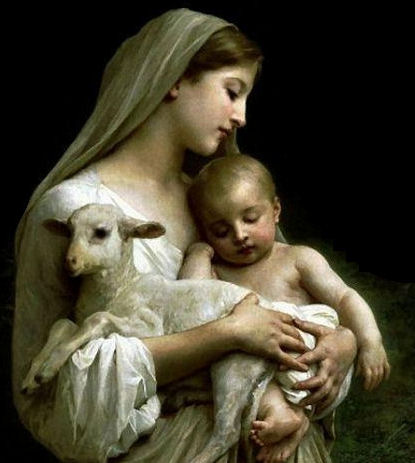
Numbers 6.22-27holding-god-holy-mother

Psalm 67

Galations 4.4-7

Luke 2.16-21


In the words of Pope emeritus Benedict XVI, “Let us ask Mary, the Mother of God, to help us to welcome her Son and, in Him, true peace. Let us ask her to sharpen our perception so that we may recognize in the face of every human person, the face of Christ, the heart of peace.”

Blessings to all of you, for a happy and peace filled new year!