Who Are You?

Today we celebrate the feast of All Saints. While many saints have their own specific feast day and are recognized by name, today is a day to remember all those who have gone to heaven but who are not formally recognized (canonized) by name, having lived their lives on earth in ordinary and hidden ways. How are we to aspire to this?

In reflecting on the Scriptures we hear today we can gain insight on how to make it home to God’s glory. These readings shed light on 3 key characteristics of what a saint should be. You could look at this like a recipe per se, each ingredient being crucial in living our lives towards heaven, in becoming holy people.

Someone who is a saint knows who and whose they are. We are all children of God, as the 1st letter of John states, and by recognizing this and living in this identity we are able to thrive. Just like someone who is raised by a mother and father has a clear sense of belonging and can simply be, so is it with our heavenly father and His Church. Can you imagine how much harder it would be for an orphan to have this confidence, this knowledge of who they are, where they come from, where they belong, and how loved they are?

John assures us of our worthiness and belonging, “See what love the Father has given us, that we should be called children of God; and that is what we are.” God has claimed us as his own, His beloved children.

Becoming a saint is all about knowing who we are!

Secondly, someone who is a saint lives their life out of a desire for God. As John’s letter further states, “What we will be has not yet been revealed. What we do know is this: When he is revealed we will be like him… All who have this hope in God purify themselves, just as he is pure.” It is this hope in God and this desire to be “holy as he is holy”(1 Peter 1.16) that gives us strength to live in a way that purifies our actions and our way of being.

The Beatitudes in today’s Gospel set forth a picture of what this looks like; they describe what happens to us as Jesus begins to live His life in us, through the Holy Spirit. These beatitudes are not something we do, but rather something we receive. It is not as if Jesus is saying, “Start being poor or meek and then God will bless you.” Rather He is saying that when the transformative power of the cross brings about in us a greater meekness, poverty of spirit, and so forth, we will experience that we are being blessed.*

So it is out of a desire to be “perfect as our heavenly father is perfect” (Matt. 5.48) that you can be transformed into a saint.

Thirdly, a saint is someone who has an eternal perspective and an eternal anticipation. We receive a beautiful and captivating image of heaven from the first reading, from the book of Revelation, and we hear of the saints: From every nation, race, people, and tongue. They stood before the throne and before the Lamb, wearing white robes and holding palm branches in their hands. They cry out in a loud voice, “Salvation comes from our God who is seated on the throne, and from the Lamb!” They prostrated themselves before the throne, worshipped God, and exclaimed, “Amen. Blessing and glory, wisdom and thanksgiving, honor, power, and might be to our God forever and ever. Amen.” Rev 7.9-12(Paraphrased)

If you look at this description of heaven you can see how liturgical it is. Our liturgy here, and when we celebrate the Mass, is a kind of ‘dress rehearsal’ for Heaven. The heart of heaven is being with God, looking upon His face, and having all our longings satisfied, while at the same time experiencing a sense of a communion of saints with God and with one another, of knowing and being known in a deep and rich way. There will be a profound understanding and appreciation, a rich love, and a sense of how we all complete one another and are one in Christ.* It is this deep communion and profound liturgy that we celebrate every Sunday. If we truly realized this and recognized this how often would we miss being at liturgy on Sunday?

As saints, it will be this anticipation for an eternity with God that will excite and draw us to Him.

So, as we celebrate the feast of All Saints let us, each one of us, remember our call to be saints by recognizing our identity as children of God, our need to have an eternal perspective as we anticipate the glory of God for all eternity, and by living with a desire for God that would lead us to ‘be’ peace, goodness, love, joy, gentleness, compassion, and mercy for eachother and for the world.

Scripture references taken from:

Revelation 7.2-4, 9-14

1 John 3.1-3

Matthew 5.1-12

* Quoted & paraphrased from: http://blog.adw.org/2015/10/ninety-nine-and-a-half-wont-do-a-homily-for-the-feast-of-all-saints/

* Quoted & paraphrased from: http://blog.adw.org/2015/10/ninety-nine-and-a-half-wont-do-a-homily-for-the-feast-of-all-saints/

“We are able!”

Today in the Sciptures we see the humble and compelling example of Christ, drawing his disciples, and us, to be united with him in his mission: “The Son of Man came not to be served but to serve, and to give his life as ransom for many.” For us it is a call to transformation; can we say in our lives that we live to serve also? In this Gospel it is specifically Jesus’ interactions with his two apostles, James and John, which draw us deeper into the massage of service and transformation.

To look at this story in it’s context we need to look three verses prior to where this Gospel passage starts. Jesus is on the road to Jerusalem, sharing with his disciples of his impending death; how he would be betrayed and handed over to the Gentiles to be mocked, spit upon, scourged, and ultimately killed.

Then, here come James and John blurting out, “Teacher, we want you to do for us whatever we ask… Grant us to sit, one at your right and one to your left, in your glory.” I would say that this may have not been the most opportune time for them to approach Jesus about this. It would have been like saying, “Really? Well could I have your car?” to someone who had just found out they had one week left to live. I don’t know what James and John envisioned when they made this request, but they certainly weren’t afraid of being honest and bold. It seems to me that they desired to remain close to Jesus, having committed their lives to be with and remain with him. But were they being conceited, and perhaps overly ambitious, wanting to be first, before the other disciples, in glory? Whatever their desires were Jesus guides and directs them with his words, maybe not to the answer they were looking for: “Are you willing to drink the cup that I drink?…” basically, are you willing to face the same things that I will face, and, “…to sit at my right hand or at my left is not mine to grant, but it is for those for whom it has been prepared.”

Like James and John many of us have our own wants and desires. And like them, they also come from a place where we think about ourselves first. These desires can sometimes come from our own imperfection and our own attachments to this world, and may not necessarily be what will make us happiest. From Jesus’ words we know that God has prepared a place for us, but it is a path that calls us to follow the example of Christ, the servant of all, and it may not look how we envision it to look.

We need not cower or shy away from the pain, or the suffering, that this path will call us to, as it surely will, but face it with strength as James and John so eagerly embodied with their energetic, “We are able[to drink the cup that you drink]!” The words of St.Paul, in his letter to the Hebrews, can also give us hope; “We have one who in every respect has been tested as we are, yet without sin [who is able to sympathize with our weaknesses]… Let us therefore approach the throne of grace with boldness, so that we may receive mercy and find grace to help in time of need.”

Like James and John we are called to transformation; A transformation of our lives and our hearts, that we would come to know and seek the desires of God, and not just our own desires. We can see proof, that God indeed can transform us, by the example of these two apostles. At the end of their lives; James was the first apostle to be martyred, and John became known as the apostle of love (the author of the Gospel of John as well as the 3 epistles of 1, 2, and 3 John). God made James and John into different people. He transformed them from the people they were before, and he can do the same for us.

In this hope let us come to receive from the Lord today, and through receiving his Word, and his Body and Blood, may we become more closely united to the heart of God, drawing hope that it is He who will transform our hearts and give us strength to follow His Son’s example of giving our lives in service to our fellow brother and sister.


Readings of reflection/Excerpts taken from:

Isaiah 53.10-11

Psalm 33

Hebrews 4:14-16

Mark 10.35-45


The Cost of Love

Today’s Gospel reading invites us to wrestle with two fundamental questions of our spiritual life; “What does heaven cost?” and “Am I willing to pay it?”

The young man asks Jesus, “What must I do to inherit eternal life?” He seems to be looking for more in life, as we hear further on “he had many possessions.” But he obviously still wasn’t satisfied. He wasn’t content with his life and felt that there must be more.

He has kept the commandments, through his actions (a list of “don’t do’s”), but Jesus invites him “to do” something more (notice the more positive response). Jesus, recognizing that this young man desired more, “[looked] at him and loved him.” Jesus offers him a deep, personal, and intimate invitation to give up what he holds most dear. Jesus knows, as he says to Peter later on in the Gospel (Mark 10:29), that he himself is a reward far greater than anything this world has to offer. If we look back at how the young man greeted Jesus as “Good Teacher” we can see that he recognizes this also, but is now faced with a major decision, literally a life-altering decision; “Go, sell what you own, and give the money to the poor, and you will have treasure in heaven; then come, follow me.” Jesus is inviting this man in to His love!

And faced with this decision we hear that “[the young man] was shocked and went away grieving, for he had many possessions.”

Today, we should place ourselves before Jesus and ask the same question; “What must I do to inherit eternal life?” I believe Jesus’ response to us would be the same as he gave this man;

“What are you holding on to?

What do you need to let go in order to cling to me?

What do you need to let go of in order to encounter, fully, my love?”

Because of our fallen nature we so easily turn inwards and look to ourselves to provide for our own needs. We tend to cling and attach too closely to things, seeking fulfillment in our achievements(in what we do) and seek our own path to happiness. Jesus even goes as far as to say that there are ‘good things’, such as our family, that distract us from him.

The truth is that we are dependent on God for everything, whether we realize it or not. We are unable to achieve total, lasting fulfillment by ourselves.

Even Jesus’ disciples asked, “How can we be saved?” His response is, ”For humans it is impossible, but not for God; for God all things are possible.” This is Christ’s promise to us, our hope. It is God who can give us a new heart, a properly ordered heart that desires first and foremost His love.
Don’t miss out on the look of love that Jesus gave the young man, the same look that he is giving you. The look that he gives us from the cross, of his great love for you. In the end only a greater love, God’s love received, can replace the disordered love we have for this world.

A simple prayer today might be a good place to start, to remind us of the cost of heaven and to place our hearts in a ready place to pay the cost; “God, YOU are ALL I need!”

Scripture readings for reflection:

Wisdom 7.7-11

Psalm 90

Hebrews 4.12-13

Mark 10.17-30

A Foreshadowing of Eternal Intimacy

A reflection from Sunday, October 4th:

We hear the Scriptures open today with God’s creation of humanity, forming man from the dust of the ground, and then woman from the rib of man. On the surface we may just look at this story as simply what it is, the story of creation, however there is one underlying theme that really sums up what is to come to fruition in God’s plan and also connects it to our Gospel message today.

This theme is that man was created for intimacy, for a deeper union. This scripture from Genesis show us of this:

“After the man had given names to all the animals, there was still not found a helper as his partner, So God created woman, and the man proclaimed, ‘This is at last bone of my bones and flesh of my flesh.’” And the verse goes on to say that, “…a man clings to his wife, and they become one flesh.”

This speaks of a deep intimacy, that 2 separate people would become one flesh.

This leads us in to the Gospel, as we hear the Pharisees testing Jesus by asking him if it is lawful for a man to divorce his wife. We must not take Jesus’ words lightly, as he speaks of the gravity of divorce. He highlights how the Pharisees and many men of his time had rejected God’s fundamental teaching on marriage, “ascribing it to their hearts, that had become hardened by sin, lack of forgiveness, and rejection of God’s plan.”

Jesus announces a restoration, a return, to God’s original plan, “From the beginning of creation God made them male and female. For this reason a man shall leave his father and mother and be joined to his wife, and the two shall become one flesh… Therefore what God has joined together, let no one separate.” God’s plan is clear, leaving no room for misinterpretation.

“Marriage has a reality beyond what mere humans bring to it or say of it. Marriage is a work of God; it has a reality and an existence that flows from God’s work, not man’s. “And any attempts to redefine or alter marriage as God has set it forth separates us from Him and His reality. This is where I believe the gravity lies.

So let’s take our reflection a step further, reading between the lines per se, going back to the underlying theme; we are created for intimacy, and a deep union.

Marriage, in this life, is meant to foreshadow heaven where, for all eternity, we will celebrate the marriage of Christ and the Church. This is the deepest desire of the human heart; to live in the eternal bliss of communion with God himself. As wonderful as marriage, and marital intimacy, can be in this life it’s only a sign, a foretaste, and a sacrament of what is to come.

Using this spousal image as an analogy, we can say that God’s plan for all eternity is to “marry” us.

Christ left his Father in heaven. He left the home of his mother on earth to give up his body for his bride, so that we might become “one flesh” with him and be taken up into the life of the Trinity for all eternity.

So if we look back now at Jesus rebuttal and seriousness towards the Pharisees and his disciples we can hopefully see his perspective; God has made us for union and intimacy ultimately with Himself, has revealed his intimate love for us by sending us His Son, and has foreshadowed it by the sacrament and the union of marriage.

So when we look at divorce it is, on a similar level, a denying of the sacredness of this greater union which we were eternally made for. Indeed many have tried and failed, while others have succeeded, to attain the vision of marriage that the Lord teaches. So as we reflect on these profound truths let us be reminded, and strengthened, by the closing verse of the Gospel today. Whatever our own failures are or have been. However we have fallen short or felt short-changed, or been left feeling broken and empty, we need to come to the Lord with a child-like trust, to seek His help.

His plan and his truth remain, and we must announce it and celebrate it, no matter what. God is calling us to himself, to an eternal intimacy, by the visible and tangible sign of marriage. Are we open to Him, as little children, “for it is to such as these that the kingdom of God belongs.”

Scripture readings for reflection:

Genesis 2.7, 15, 18-24

Psalm 128

Hebrews 2.9-11

Mark 10.2-16

A crucial question!

Jesus asks us a very crucial question. A question of the cross! “What were you arguing about?” Let’s look at this question in the context of the whole story (Mark 9.30-37)

The Gospel starts with Jesus, journeying with the disciples, making their way through Galilee. Looking at this in it’s place in scripture we know that Jesus was on his way south, to Jerusalem, to his eventual crucifixion. So it is not a surprise that he is preparing his followers for the reality of what he will face. Maybe he is also suffering in his own way, thinking and talking about it, and wanting his disciples to realize the gravity of this journey. Maybe he wants them to understand the pain in the reality that he is facing. In response to this, however, his followers were confused and afraid to ask him about it. We hear further on that they were arguing and discussing about which of them was the greatest.

Where do we turn when we face the reality of the cross, of dying to ourselves, or even death? Where do our thoughts go? What do we focus on? What do we discuss? Jesus’ disciples are not so different from us. In facing the reality of the cross, and the pain and confusion it would hold, the disciples turned inwards. Instead of empathizing with Jesus, or even asking for clarification so that they could possibly identify with him, they were discussing which of them was the greatest.

Honestly, it is a sad and embarrassing reality that so many of us, and I speak first of myself on this, who call ourselves disciples seek to preoccupy much of our lives with things that are futile and of little real importance in life. We busy ourselves with the things and the worries of this world.

Do the things that matter most to God take priority in our lives? Such as salvation, what is true and virtuous, and prayer, to name a few? This is the question that Jesus asks his disciples, that he asks us today! “What are you discussing?” Yes, what ARE we thinking about as we make our journey?

The reality of the cross is that there is power there, yes there is pain also, there is uncomfortability, but when we embrace it and get over ourselves, when we identify with Christ and come with him on the journey, its power transforms our hearts. Instead of looking to ourselves we start looking to how we can serve, how we can sacrifice, how we can be more like the one who took the cross for us.

A phrase that comes to mind that sums this up so well is, “I am third.” It is this simple line that we can repeat when we catch ourselves getting distracted with ourselves. God is first, others are second, I am third. It is this that will lead us to experience and encounter true joy.

It really is a paradox, that we must let go of ourselves so that we may be fully ourselves. To be the last of all, the servant of all, that we might be first in eternal life.

So let us ponder, in a special way today; What are we discussing? This is the question that prepares us for the cross. Both the pain and the power of it. What am I making a priority? What are we thinking about and talking about as we make our way through life? Answer the Lord honestly and let Him go to work.

Additional reading:

Wisdom 2.12, 17-20

Psalm 54

James 3.16 – 4.3

He has chosen the poor

Reflecting on the Gospel reading today(Mark 7.31-37) about Jesus curing the handicapped man we might dismiss it as having no relevance for us. But, in truth, all of us have our handicaps. The fact that ours may not be as visible as those of the man in the Gospel doesn’t make them any less real.

In the Gospel, this man is brought to Jesus. We don’t know his history at all, only that at the time of the story he is deaf and has a speech impediment. The next part is a very intimate moment as he is brought to Jesus and Jesus actually takes him aside, away from the crowd, and physically touches his ears and spits and touches this man’s tongue. Jesus makes Himself present to this man, in his own vulnerability, in a very tangible way and uses tangible signs to release him from his insecurity and suffering.

ephphatha

In one way or another all of us are wounded, we each have or own handicapped, our own vulnerability; Something that hinders us from being able to fully alive, or a weakness that continually reminds us that we are wounded. Some of our weaknesses and wounds may be from bad childhood experiences. Our wounds may be from the death of a loved one, a sickness, or by a non-acceptance of ourselves. Others are wounded by failures that they carry with them, maybe an inability to forgive, or from facing rejection or indifference.

Our wounds and our vulnerabilities usually lead us to find security in something that is not always wholesome, either compensating in our personality or using other means to numb our minds and our hearts. However, in the Gospel today Jesus shows us another way. We see that Jesus not only wants to be with us and draw us away from the noise of the crowd, from the voices that will dampen our spirit, but that he also desires to heal us. He desires to journey with us in our woundedness, in our own specific vulnerability.

One of the things, in particular, that strikes me was a line from our second reading(James 2.1-5) today and how it relates to this Gospel story, “Has not God chosen the poor in the world to be rich in faith and to be heirs of the kingdom.”

To take this back to our Gospel passage, the man Jesus healed was indeed poor; He has a great need, the need for a healer, the need to be complete. It is in this man’s great need, in His littleness, that Jesus comes and is able to work with Him and through Him, that out of this man’s suffering Christ brings His victory.

If we are rich in this world what need do we have of Christ or, rather, how do we see that we need Christ? If we do not need a healer, a wonder worker, a Saviour, then what do we need from Christ? Is it not our way, that when the Lord gives we rejoice, but when we are faced with suffering we resist and complain. However, it is a beautiful image, much like the one we see in the Gospel today, that in our own poorness, in our woundedness and vulnerability, we share in Christ’s suffering and that he draws near to us, if we but come to Him. He touches our wounds, He journeys with us and, in tangible and real ways, heals our broken hearts and brings us to rejoice in His victory over all that tries to hold us from Him.

“Has not God chosen the poor in the world to be rich in faith and to be heirs of the kingdom that he has promised to those who love Him?”

So let us embrace our wounds, our littleness, our poorness, as a way to His immense love for us!

The Law – Protection & Presence

God is love, and His Law is ultimately an expression of His love for us. The readings we reflect on today teach a proper understanding of the Law that God has given us and it’s relationship to our hearts. Let us look at how the readings teach us this.

Deut 4.1-2, 6-8

Psalm 15

James 1.17-18, 21-22, 27

Mark 7.1-8, 14-15, 21-23

The first thing that stands out to me is that God’s Law is about protection and security. We receive a promise in Scripture from the text of today’s first reading, “…hear the statutes and decrees that I am teaching you to observe, so that you may live and may enter and take possession of the land that the Lord… is giving you.”

We see that obeying the Law is the basis of life and a doorway to further blessings. Many today see God’s Law as rules meant to inhibit our lives, like prison walls, limiting our freedom to “do as we please.” But really they are defending walls.

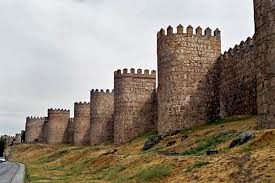
I enjoy history, especially the architecture and magnificence of ancient cities. One of the most defining characteristics of these cities were their walls, not built to imprison its citizens but rather to protect from the enemy. Within the walls there was security and the promise of protection, while outside lurked danger. It is like this with God’s laws; for those who keep them they are a great source of comfort and protection and contain the promise of victory.

images-1

I have heard it explained another way once before; the law of the Lord is like the walls around a playground. This is not just any playground, picture this flat grassy spot with swings and slides atop a tall island in the sea, sheer cliffs on all sides. With a sturdy wall around the cliff’s edge on all sides the children can fling themselves about into every frantic game without a worry or care, or even an awareness of the danger on the other side of the wall. But knock this wall down, leaving the peril of the cliff edge, and they won’t fall over but rather huddle in the center of the island afraid of how close they could get to the danger that surrounds them. God’s law is not there to take away our fun, but that we might truly find life and happiness.

Of course the devil is a liar and tells us that we will be happier if we sin, that we are being hemmed in and limited by God’s law. But instead of making us free sin enslaves and traps us. We probably don’t have to look very far in our lives to see where our wounds and our brokenness lie, more than likely coming from our own insistence in journeying outside God’s loving and protecting commandments.

The second thing that stands out in today’s readings is that God’s Law requires presence, requires our hearts. There is a great need for God’s law to be in our hearts for it is where “we live”. It is the place where we discern, ponder, and ultimately decide.

“Here me, all of you, and understand. Nothing that enters one from outside can defile that person; but the things that come out from within are what defile… From within their hearts come evil…” So doesn’t this make sense that the heart is where God and His law need to be. This is where the heat of the battle is.

One of my favorite pieces of technology is the answering machine. I can never miss a call from someone , even when I am not home. However I have discovered that there is a flaw to this technology; an answering machine is very impersonal and many people will not even leave a message, which is understandable. When we call someone we expect to be greeted by them on the other end of the phone line, so we can feel put off when we realize that it is just a recorded message on a machine. In this case, a person’s voice is present while the actual person is absent.

We can compare this with how we are present to God, and to others, in our daily lives. This can be seen quite clearly in the Gospel passage from Mark: “This people honours me with their lips, but their hearts are far from me.” And the passage goes on to say, “…in vain do they worship.”

We can be physically present in Church, we can be physically present to our spouse’s, to our families, to our siblings, to our friends, to a stranger, but if our heart is not present all is in vain.

From these words of Scripture we see the importance, that the law of the Lord must find its home in our hearts. Our awareness of God’s law can only shift to finding a deep home in our hearts through prayer and meditation; through the careful, persistent, and thoughtful reading of God’s revealed truth, coupled with gratitude and love of God.

How different our lives are lived when we are truly present with our whole hearts; take a word of forgiveness, for example. If it does not come from the heart, of what use is it? I will not set the offender free. Nor will it result in a true reconciliation between the parties. Or take a word of welcome, for another example; I may open the door of my house to a person with kind words, but unless I make room for them in my heart they will be a stranger to me. Our actions have purpose and meaning when we know who and what we are living for.

God has given us His law that we might live in His protection, from our hearts, and it is ultimately our choice as to whom and what we will love more; God and His law, or this world and it’s way of sin and compromise.

It is no mistake that the summary of God’s law is simply, “Love the Lord your God with all your heart and your neighbor as your very self,” for it is only love that unlocks the door of the heart.

In the end, the law comes from Love, the God of love, who is love. And thus it is love that unlocks the law, love that makes us realize that the law is a gift, a gift of God’s love, a gift that will protect us and guide us, a gift that will heal and transform our hearts and our lives.

*Main ideas and concepts, as well as quotes, taken from Monsignor Charles Pope’s Article: The love of the law and the law of love.

*Ideas and text also taken from: New Sunday & Holy Day Liturgies by Flor McCarthy (pg 284)

Gardening? Who knew?

Have you ever tried your hand at gardening?

Gardening is a very intricate work, from what I have discovered of my limited time as a gardener. It takes time and planning, and it takes patience. It takes constant care and nurturing; knowing the right nutrients and soil composition for the different plants or vegetables. After watering the rest is out of the gardener’s hands. The plants will either grow or not. They will either be strong or maybe hardly come up. If you thin out the smaller ones the bigger plants will yield more, but the plants grow of their own, the gardener can not force them.

Today in the Gospel (Mark 4.26-34) Jesus uses parables to describe His Father’s kingdom. He uses a parable of a gardener who plants seeds and waits for them to grow. This parable is an analogy for our life of faith and of living in union with God as we prepare for His coming kingdom. God has already planted the seeds of faith in our hearts, I would say that is why all of us are here today. And this Gospel reveals 3 essential characteristics of living in union with Christ.

First, the life of our union with Him does not come from ourselves, but from God. Christ has initiated and planted the seed of faith, and the power of growth comes from Him, our Creator. It is He who constantly is breathing his grace into our lives, and no matter how hard we try we would never be able to grow in intimacy with Him of our own strength or will. We cannot force union with God by our own actions. Our life of union with Him depends primarily on God. He is always at work, as we hear in the parable, even while we are asleep. We must simply receive His nurturing.

Second, growth in holiness and relationship with Christ is a gradual process. Unlike in Hollywood movies where heroes become world-wide champions over the course of two hours, Christians develop wisdom, joy, and virtue through a patient and consistent effort to cooperate with God over our entire lives. We can often become discouraged when we don’t see growth happening or when we live with our ongoing struggles with bad habits, but we must realize, especially as we live in a society of instant gratification, that patience will produce the biggest yield when it comes to our relationship with God. The full-grown, healthy plant that will attract others to Christ and nourish those around us requires a patient effort and unshakable confidence in God.

Third, spiritual growth takes time. Imagine a gardener yelling at their recently planted seeds, “Hurry up! Grow faster!” It’s a weird picture, but every time we get frustrated with ourselves, at our slow progress, this is what we are doing. The seeds will not grow any faster, but we must trust that God is accomplishing all in His time.

So as you seek to grow in holiness, in your relationship with God, remember it all depends on God and His constant care. And it takes time and patience. Next time you are thinking about your growth in your faith journey, remind yourself of a gardener tending their garden.

This growth in our union with God that we experience, as we are reminded about in the readings today, is for the coming kingdom of God, that we may be prepared to be fully in Him.

This reminds me of when we pray the “Our Father”:

“Thy kingdom come, thy will be done, on earth as it is in heaven.”

The more we are open to the Lord, as we seek His will in our lives by following our conscience, the teachings of the Church, and the examples of Christ and the saints, the more abundant and fruitful our experience of life will become as His coming kingdom is revealed here on earth, in our lives.

So let us remember to be open and generous with the gardener of our hearts as we trust and patiently seek His kingdom from day to day!


Other readings for reflection from today:

Ezekiel 17.22-24

2 Corinthians 5.6-10


*3 main points of the reflection taken from “The Better Part” by John Bartunek, pg 381

1 + 1 + 1 = 1

Today we celebrate Trinity Sunday. We celebrate specifically God in three persons, God the Father, God the Son, and God the Holy Spirit. There really is such a depth here to ponder, but also a simplicity. The word ‘Trinity’ isn’t a word we hear in the Bible, but in the Gospel today(Matthew 28.16-20) we hear about Jesus’ call to make disciples of all nations baptizing them in the name of the Father, and the Son, and the Holy Spirit. This is the Trinity. In essence the word ‘Trinity’ is Christianities most basic description of who God is, who He has revealed Himself to be, and who He needs to be in order to save us.

Unknown

[Perhaps, in exploring what the Trinity is we do best to begin by quoting the Catechism which says, The Trinity is One. We do not confess three Gods, but one God in three persons. These divine persons do not share the one divinity among themselves but each of them is God whole and entire. (Catechism, 253).

So there is one God, and the three persons of the Trinity each possess the one Divine nature fully. The Father IS God, He is not 1/3 of God. Likewise the Son, Jesus, IS God. He is not 1/3 of God. And so too, the Holy Spirit IS God, not a mere third of God. So each of the three persons possesses the one Divine nature fully.

It is our experience that if there is only one of something, and I possess that something fully, there is nothing left for you. Yet, mysteriously each of the Three Persons fully possess the one and only Divine Nature fully, while remaining distinct persons.] –Excerpt taken from a Homily by Msgr. Charles Pope

This great mystery is the central mystery of our faith and our life as Christians, however, being a mystery, it can never be fully known by reason, or intellect, alone. It is hard to even explain it in all it’s richness and depth. This is the way I’ve heard it said before, if I was asked to explain my love for my children I wouldn’t have the words to be able to express it fully, as simple as my love for them is. In the same way, how would I be able to fully explain who God is or have adequate words to express His mysterious greatness.

Thankfully we are able to see traces of His Trinitarian being in his work of creation and throughout the Old Testament, as we hear in the reading from Deuteronomy (4.32-34, 39-40), and more fully after the incarnation of God’s Son and the sending of the Holy Spirit (Catechism 237), as we have celebrated throughout the Church year.

God reveals and invites us into His Trinitarian life through our baptism, which is further lived out in the life of the Church. And His Spirit bears witness with our spirit, as we hear in St.Paul’s letter to the Romans(8.14-17), that we share in His life, that we are His children and share in the inheritance of His kingdom.

There is something we do quite often, as Catholics, that reminds us of God’s presence among us in the Trinity. Does anyone know what it is?? The Sign of The Cross! Do you ever think of the significance of this, or what it means? It is a reminder of our baptism, our new life in Christ. It is a reminder of the Trinity at work in our lives. What power these words have, as we say them before we pray, “In the name of the Father, and of the Son, and of the Holy Spirit.” What if we were to say this as we rose at the start of a new day, “In the name of the Father, and of the Son, and of the Holy Spirit.” As we got to our work, “In the name of the Father, and of the Son, and of the Holy Spirit.” Or before we tackled a certain chore or task, “In the name of the Father, and of the Son, and of the Holy Spirit.” What power and strength our daily tasks would have, united in the Trinity who we are acknowledging is at work in us . I believe that it is worth pondering and internalizing.

The closing words of today’s Gospel remind us that God is always present to us: “Behold, I am with you always, until the end of the age.” He is with us by being always within us. We have become temples of the Holy Trinity through the blessed waters of baptism and have become a dwelling for Him in the very core of our being.

Let us ponder this great mystery and pray that God would reveal Himself to us in the Trinity in a deeper way. And let us remember that He is present with us, through the Father, Son, and Holy Spirit, calling us to be His children.

You will receive power

Do you have a favorite superhero? Why is he/she your favorite? There is usually one particular reason why you like something, like a superhero, because it/they have something unique about them that sets them apart from anything/anyone else!

In the same way, God has given us each a unique and specific gift!

Today(May 17) we celebrate the feast of the Ascension of our Lord, Jesus, into heaven. After dying on the cross and coming back from the dead I’m sure the disciples were thinking this was too good to be true, but then the reality sets in that He will be leaving them for good. We hear in Mark’s Gospel (16.15-20) Jesus’ call to his disciples to go into the world and proclaim the good news, which they have witnessed; His life given for us to enter eternal life.

We further hear in the Acts of the Apostles(1.1-11) Jesus’ hope for us in His departure; “You will receive power when the Holy Spirit has come upon you and you will be my witnesses…to the ends of the earth.”

What a promise. Jesus is leaving, but He promises he will remain with them. He Spirit will indeed come to give them power, His power, it is only a matter of when! (Spoiler: This ‘when’ is what we call next Sunday’s celebration: Pentecost)

In the Gospel Jesus also reveals what they will be able to do with His power; truly amazing things [Jesus’ disciples were given ‘super’ powers]:

-Cast out demons

-Speak in different languages

-Pick up snakes

-Drink deadly things and not be harmed

-Heal the sick

The amazing thing about this is that He is also calling us, just as much as His first disciples, to do these things! To be His witnesses and, in His name, through the power of His Spirit to do amazing things. Do we live this though? Are you open to His Spirit?

As we hear in Paul’s letter to the Ephesians(4.1-13) each one of us is given the grace that we need, the gifts that we need, to accomplish this. Some are called to be apostles, some prophets, some evangelists, others teachers. For what purpose though? All for the building up of the body of Christ, the Church, and His kingdom!

In a way, God has called us to be ‘holy’ superheroes. However, it is not for our glory, much like the usual superheroes that take all the credit for themselves, but it is for His glory, His Church!

We have each been given a unique gif, something that sets us apart from everyone else. God desires for all people to know His love and His power (the Good News), but it is through those who know this love and power firsthand that he can spread it to all!

I would encourage you to pray to the Holy Spirit, and ask for the Spirit to guide and direct you to discovering your unique gift that He has given you for the building up of His body. Let us open our hearts, and as we open ourselves to the power of His Spirit may we come to internalize His call for us to be His witnesses to the ends of the earth.