Peace I give to you

The words we hear in today’s Gospel (John 14.23-29) resonate across the years and are just as practical for us today as they were for Jesus’ disciples; “Peace leave with you; my peace I give to you. I do not give as the world gives. Do not let your hearts be troubled, and do not let them be afraid.” There is such security in these words.

But what is peace? OR another way I like to look at it is, WHO is this peace? Because peace isn’t merely the absence of conflict, but rather, the presence of love! Peace IS God’s love, the Holy Spirit, in us. [What does the human heart seek, but the deep joy of knowing that we are loved unconditionally, the opportunity to love fully in return, the certainty that our lives have meaning, and the inspiration of having a mission with eternal consequences.]*

God has, through His son, shown his love for us. By his death on the cross Jesus entered into our sin and was raised up, and now must return to the Father, so that His Spirit may dwell with us, as we hear in the Scriptures today, to guide us and “to teach [us] everything and remind [us] of all that [Christ] has said.”

We can trust him, who is Lord, who knows what is going to happen. He is in control and watching out for us. He cares deeply, and absolutely, about us hence this discourse with his apostles that we are reflecting on today. But we must claim this ‘peace’ and make it our own by turning to the Lord, by remaining with Him.

We see this in action by the early Church in the first reading today, from the Acts of the Apostles. The early apostles are encouraging the people of the Church, as they seek to heed the instruction and the prompting of the Holy Spirit, to not be burdened by cultural practices but rather to seek the essential meaning and purpose of Christ’s teachings. In this way they would not be burdened by what they had ‘to do’, but instead live out of the freedom, and PEACE, of knowing whose they were.

So as we reflect today on this peace which Christ gives to us, let us remember that the same Spirit which guided the early Church is still alive today guiding our hearts towards God and His love for us, and towards our eternal home. Let us rest secure in Jesus’ words, “Do not let your hearts be troubled and do not let them be afraid.” “Peace I leave with you.”

In closing I would like to share a song with you. Songs have a way of simplifying a message in a beautiful way and I thought this one expressed beautifully our reflection today!


Focus Scripture:

Acts 15. 1-2, 22-29

Revelation 21. 10-14, 22-23

John 14. 23-29


*Paraphrased from “the Better Part” by John Bartunek, pg 941

The Great Hike

These reflections continue to make apparent the ways that God is working in my life and my journey. I hope and pray that it may encourage you:

In the Gospel today(Luke 9.28-36) Jesus paints for us a picture of what prayer, and our relationship with him, should look like, if we are serious about him. He teaches us how to come closer to him, and how to hear the voice of the Father and encounter the glory of God.

We start out by seeing Jesus with his closest disciples, and friends, hiking up the mountain to pray. Now, this wasn’t just any leisurely walk. Today Mt.Tabor, historically where they are in this Gospel passage, has a switchback cut into it, much like the one you see out at the Tuya. However I wonder if they would have had a nice switchback like that back then, or just a steep trail. Regardless, you can picture how steep a climb it would have been, a pretty grueling hike.

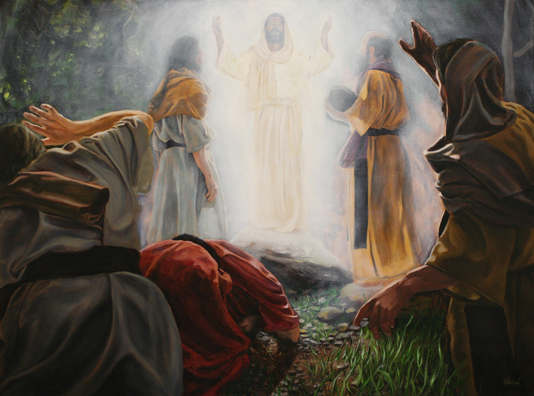
When they got to the top of the mountain they prayed there, and Jesus was transfigured before them. Now what does that mean? They would have seen him as he would be after he had gone up to heaven, in his glorified body. The apostles were slightly surprised (to the point where Peter spoke without knowing what he was saying), and yet amazed at this opportunity wanting to prolong the experience by offering to set up three tents; for Jesus, Moses, and Elijah. However this moment could not last forever. They eventually have to come down the mountain to the realities of daily life. Jesus having shared this intimate moment with them in order that they would be encouraged and strengthened for the suffering that was to come.
the-transfiguration.jpg

As I think of the relationship that these men had with eachother and the experience that they had I thought of the relationships with people I have had throughout my life. I haven’t listed every relationship, but just four main ones that I wanted to focus on.
Firstly, I have had acquaintences in my life. These are the people I have met of whom I usually remember their names, and perhaps even know a few things about them(ie. their occupation, who they are married to or related to). I may see them a few times a month(perhaps even more often in Telegraph Creek), but I don’t really share much in common with them, and don’t really talk about anything much deeper than the weather.

Then I have those people I consider my friends. These are people I would see every couple of days or talk to on the phone once every week or two. But I would choose to go a little deeper with them and share with them in their life’s happenings, in their joys, sorrows, and struggles.

I also have my family; my parents and siblings. Some of my fondest and best memories are the times I have spent working or doing activities with my father and also the times I have spent staying up past midnight sharing thoughts and receiving wisdom from my mother. My siblings and my parents I am stuck with, however I would not trade them for the world. On top of that, I owe much to them for who I am today.

Lastly, I have my relationship with my spouse, Denise. This is someone I have chosen to be committed to through the good times and the bad, forever until death. This relationship is the one I invest in the most. I see this person every day and need to consciously take moments to connect, to communicate, to repair hurts or misunderstandings. We take specific time to go deeper, to share our deepest struggles, hurts, joys, and so on, so that we can walk and journey together. And because of these reasons, and more, I share a deeper intimacy with my wife than anyone else in my life.

Now when we look back to the Gospel passage with this rough model of relationships as a guide we can see that it is easy enough for us to relegate Christ as an acquaintance in our life, only coming to him in prayer when we happen to remember. Or even as a friend, taking some time every few days to connect with him and spend a few minutes. Maybe even offering him our struggles and hoping he’ll help us out. What if our relationship with Christ was compared to that of our relationship with our father, mother, or siblings; we cherish those special moments we get to connect with him, that retreat once a year to really go deeper, or that moment when you had a moving experience and felt really close to him, or maybe even attending regular Sunday service or Mass. As in any relationship there is a natural progression, if we desire it. Even my wife started out as an acquaintance to me.

The truth is, as we see in the Gospel story today, Jesus Christ desires a spousal relationship with each of us. He desires to be that close to us, and even closer than that. We are after all his bride, the Church. But we need to press on through those hard moments and take the climb, the crosses and struggles in our lives, and come to the silence bringing these with us to be alone with Him where we can encounter His glory and that deeper intimacy (which we will encounter in all it’s fullness in heaven). And then, after being restored, come down from that mountain pondering the glory we have encountered which will transform us to be able to dwell with Christ in every moment, no matter where we are or what we are doing or who we meet, to carry in us, as it were, an eternal flame.

In this liturgy today the Church presents us with this Gospel challenge, still close to the beginning of Lent, perhaps reminding us that it is only by dedicating ourselves more than usual to prayer, to heartfelt conversion with Christ, that we will truly be transformed. But this lesson applies not only to our Lenten journey, but just as equally to our daily preparation for whatever we will face as well as our regular preparation for our participation in the Sunday liturgy.

You know, every Sunday(as Catholics) we have the amazing opportunity to receive Jesus Christ in the Eucharist, his body given for us(Matt. 26.26-27, Luke 22.19-20)! Jesus Christ comes in to us! He becomes one with us, in our very bodies! Does your relationship, your prayer, with Him reflect this intimacy? Or is he just an acquaintance that you are receiving wholly into yourself? Will you take the time to go with him to the mountain? He wants you to go there with Him. He’s inviting you, even as he comes to you today, and gives himself entirely to you! How deep are you willing to go?
Dali-The-Sacrament-of-the-Last-Supper-550x341.jpg


* It is a relationship with Jesus Christ that makes whole all other relationships! For it is only first in truly encountering him within ourselves that we can then truly encounter him in others!


Scripture for further reflection:

Genesis 15.5-12, 17-18

Psalm 27

Philippians 3.17-4.1


A Desert Trial

The Church invites us into the season of Lent, which started this past Wednesday. It is a journey, so to speak, in imitation of the 40 days Jesus spent in the desert before his public ministry. The Gospel passage today(Luke 4.1-13) highlights this event, a time of reflection, prayer, and temptation.

When you think of the desert you may at first think of it as a harsh place, dry and lacking vegetation, but it is because of this that it is an ideal place for reflection. Jesus is led by the Spirit into the desert at this opportune, and crucial, moment in his life. It was, for him, a time of awakening and solidifying his mission. And it can be for us also!

Perhaps it comes at an opportune time for us also, in this present day when we are caught up with so many distractions and things that fight for our time and attention. Perhaps it is time for us also to reflect on our mission as Christians. Do you know what your mission, your call, is? What better place to start then, than in the loneliness of the desert, as we reflect on the three temptations of Christ as they light the path for our mission also.


Unknown


The devil’s first temptation is for Jesus to turn stones into bread. After such a long fast from food I am sure that the thought of bread was a strong temptation. The devil urges Jesus to give in to his bodily desires.

We too have temptations to earthly desires, perhaps moreso today than in any other generation. Whether we struggle with instant gratification (we can get what we want NOW, with the click of a button, and we don’t need to delay), over-indulgence (with so much excess it is easy to WASTE our time and our money on things that don’t really matter or even draw us away from God), or over stimulation(robbing us of quiet and leading us to become desensitized and seeking to be constantly occupied). These may be extremes, but the truth for us in the matter is in Jesus’ response to the devil, “Man does not live by bread alone.” We have deeper hungers and greater needs. While our body may hunger for food and other worldly things, what do our hearts hunger for? As we hear in the reading from Romans today, “The word is near you, on your lips and in your heart.”(10.8-13) God’s Word, Scripture, is what truly nourishes us. He is the true need that we should not neglect!

The second temptation is that of popularity and power. The devil promises Jesus all the glory and authority of the kingdoms of the world.

In regards to popularity, we all like to be respected and fit in, and we don’t like to be laughed at or ridiculed. This temptation can cause us to make compromises to fit in, or to be silent when we should speak out for what is right.

Power, on the other hand, offers an easy substitute for the hard work love can call for. Our temptation is to replace love with power, when we might hold unforgiveness over someone, or spread little tidbits of deceit and gossip. Our sin is a way of bowing to the devil. Jesus’ response, to serve only the Lord, is our way to freedom. When He is the primary one we submit to and fear then we do not need to please anyone else because we can be assured of His love and acceptance for us.

The third temptation is for Jesus to test God in order to confirm his faith in Him. The devil assures Jesus that if he was to throw himself off of the highest wall of the temple God would surely save Him, and he would be the talk of Jerusalem. The devil even uses Scripture to affirm this: “On their hands [the angels] will bear you up, so that you will not dash your foot against a stone.” (Psalm 91) It is a temptation for us to think that no matter what we do God will save us. And it can be so easy for us to take the credit and the glory for ourselves. However His Spirit is within us when we trust that He has the best plan and that He deserves all glory and thanks.

So, all three temptations come down to the same thing for Jesus: faithfulness to the Father; to put material things and his own glory first, and put God and spiritual things second. In all of this though, Jesus never yielded. Why? The answer comes in the first line of the Gospel passage; He was full of the Holy Spirit. When we are filled with His Spirit there is no room for the devil’s words. We too will face these same temptations. But we only need to place ourselves in his mercy, and seek Him with faith. This gift of faith He gives freely to us if we but ask. We too need to enter this lonely place, this desert, to keep our eyes on the one who refused to turn stones into bread, to jump from great heights, and to rule with great power, to allow God’s Spirit to fill us in order that we might remain faithful.

Resisting temptation was not easy for Jesus, nor will it be for us. The temptations are never over, but in Jesus we have a brother who knows what we are up against. He can give us strength to be faithful and to experience the firmness and resolution in our own mission as Christian people; to put God and spiritual things first and to seek His will in our lives. Take heart and do not be afraid to enter the desert, with Jesus by your side, this Lent.

The link between faith and love

There is a very essential link between faith and love, as we hear about in the second reading today; “There are three things that last: faith, hope, and love; and the greatest of these is love.”

The Gospel goes on to illustrate this for us, through the reaction of the people in Jesus’ hometown to His words.

There is no doubt that Jesus was a prophet, sharing the Good News of the kingdom. However the people’s reactions to his words, at first favourable and gracious, turned into doubt and hostility quite suddenly.

What was the issue? For one thing, they saw him as just the son of Joseph. For another thing, they felt that if Jesus had anything to offer then surely they, the people of his own hometown, should be the first to benefit from it. Along with not showing any real faith in Jesus it was this demand, or right that they felt, that began to harden their hearts.

However, Jesus illustrated to them, through the stories of the prophets Elijah and Elisha, that there is no room I the kingdom of God for privilege. It doesn’t matter who you are but, rather, whether or not you have faith. God’s love begins wherever there is need and the faith to receive it.

But why, in the midst of this profound message, did Jesus’ own countrymen turn on him? Especially as he spoke to them in love, and as they acknowledged his words as ‘gracious’?

Firstly, because of what he said. For they saw him offering to Gentiles, to sinners, what they, the people of God, felt was due to them.

And secondly, and the deeper reason, because he showed the ugly things that lay hidden, in them. Their selfishness and lack of faith were exposed. To paint a picture; it’s like a stagnant pond, it looks clear at first, but upon stirring it up or treading through it you get all of the mud rising to the surface.

Regrettably, religion sometimes brings out the worst in people. It makes them narrow-minded, small-hearted, and intolerant. We see an ugly example of this in the citizens of Nazareth, being pushed to the point of utter hate. The sad truth is that this kind of thing still happens today.

But, religion can also bring out the best in people. It makes them more tolerant and loving. Religion, practiced in truth, frees the heart and mind and fosters harmony with others. Religion is beautiful when it is like this. This is what Christ came for, as we are reminded today. He comes to lead us closer to our brothers and sisters, and closer to God and His kingdom.

If you were to ponder something today I leave you with this: What does religion bring out in you? Are you a stagnant pond or a bubbling spring?

Remember: “Faith, hope, and love abide, these three; and the greatest of these is love.”


Readings for reflection:

1 Corinthians 12.31-13.13

Luke 4.21-30


  • Main idea for reflection taken from “New Sunday & Holy Day Liturgies: Year C” by Flor McCarthy

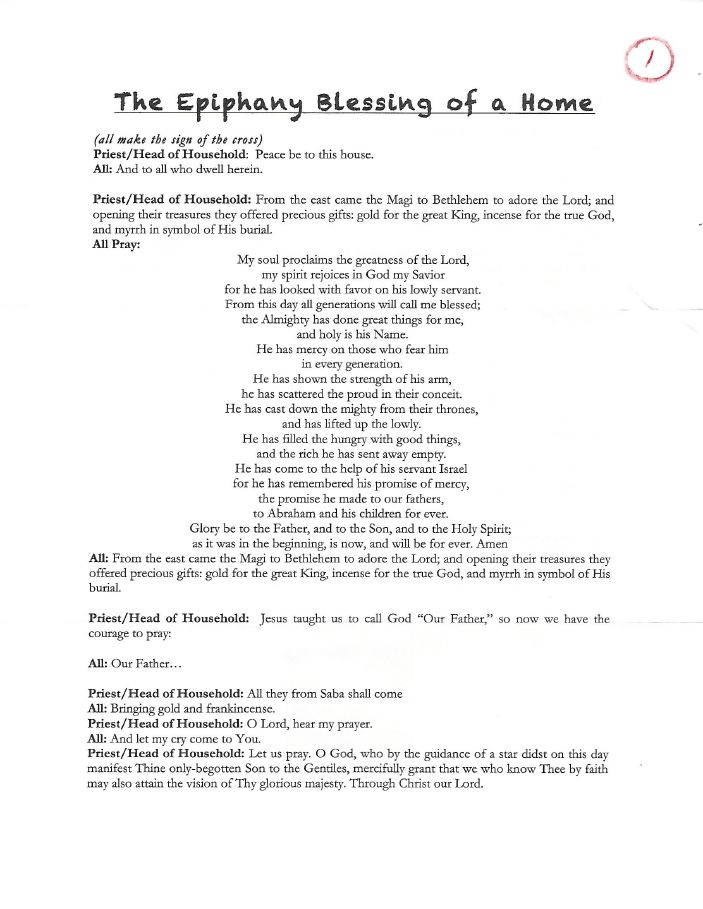
Epiphany House Blessing

Yesterday, on the feast of the Epiphany, we had our annual house blessing!

We invite you to adopt this custom in your family. The family gathers to ask God’s blessing on their home and on those who live in or visit the home. It is an invitation for Jesus to be a daily guest in our home, our comings and goings, our conversations, our work and play, our joys and sorrows.

“Chalking the door” is a way to celebrate and literally mark the occasion of the Epiphany and God’s blessing of our lives and home. With time the chalk will fade. As it does we let the meaning of the symbols written sink into the depths of our heart and be manifest in our words and actions the Latin words, Christus mansionem benedictat, “May Christ bless the house.”

Here is the blessing, or you can go to the link here to find the more printer friendly version:

Epiphany 1.png

Epiphany 2.png


Whose steps are you walking in today?

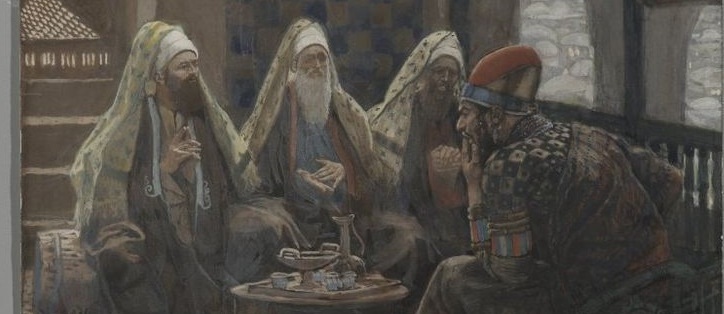
I thought I would share with you today some thoughts on the Epiphany story, taken from Mathew’s Gospel (2.1-12). I have paraphrased a reflection from Fr.John Bartunek (The Better Part) and also added my own reflections to it.

The Gospel today reveals to us 2 different responses to Christ’s coming. We see the response of Herod in comparison to the response of the Magi.

Herod had spent much of his life furthering his own personal kingdom at the expense of others’ reputation and others’ lives solely for his own personal glory. Herod most definitely feels threatened when Christ enters the scene, a King with authority from on high. All of his labours are at risk because of this supposed king.

The Magi, on the other hand, detect the coming of this long awaited King through natural signs, which God surely used to communicate with them in a way that they would understand. Far from fearing the demands that this new king might make on their own personal lives they joyfully seek him out, I’m sure through many hardships and discomforts on their long journey, and they rejoiced to know that God’s Saviour was finally coming. Instead of hoarding their treasures, the fruits of their life’s labour, they bear their gifts to Him.

This makes us think of what our response to Christ is when he comes into our lives, throughout our day to day comings and goings. As I was reflecting on this in my own life a few thoughts came to mind;

What is my response when I am faced with those special moments in my day when Christ is present to me through others? Or when he is present to me in little ways trying to guide me? Do I face these moments as inconveniences or joys?

How does my life reflect my relationship with him? Am I filled with joy when I think of the moments I can spend with Christ in prayer throughout the day? Or do I avoid these moments by getting caught up in other distractions or escapes?

How much effort do I put into seeking Christ in every moment of every day? Am I open to taking that journey with and towards Christ, whatever the cost?

Let us reflect on these conflicting reponses as we ponder the presence of the Christ-child in our lives. Whose steps are we walking in, in our hearts and our lives?

Magi-with-Herod-WM-James-Tissot-PD.jpg

http://www.amazon.ca/The-Better-Part-Christ-Centered-Resource/dp/1933271108

http://www.amazon.ca/The-Better-Part-Christ-Centered-Resource/dp/1933271108

Happy New Year

Happy Solemnity of Mary the Mother of God!

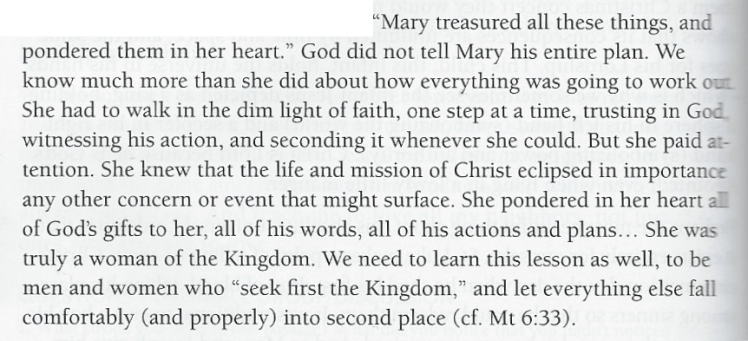
As we celebrate this great feast day I wanted to focus on a specific line from the Gospel reading today(Luke 2.16-21), and it is a similar line to the one we heard in last Sunday’s Gospel(Luke 2.51):

Mary-1.png

(excerpt taken from “The Better Part” by John Bartunek, pg 538)

In closing I leave you with the words of Pope Francis at today’s Angelus (as we also celebrate the World Day of Peace) , “The peace which God the Father wants to sow in the world, must be cultivated by us.” This involves a “real struggle, a spiritual battle that takes place in our hearts, for the enemy of peace is not only war, but also indifference, which makes us think only of ourselves and creates barriers, suspicions, fears and closures [of mind and heart].”

I encourage you to take some time today to ask for Mary’s intercession in seeking first the kingdom of God in your life, in seeking peace; A simple ‘Hail Mary’, the Angelus(below), the Magnificat, or the whole rosary! May she show us the face of Jesus her Son, who bestows upon the entire world mercy and peace.

d4d25a499520b4c299b1fd7e31d94ac1.jpg

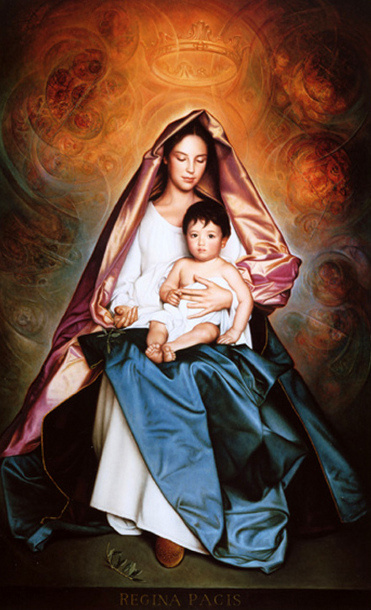
regina-pacis

PEACE TO YOU!


A Compelling Kingdom

What comes to mind for you first when you hear the word “king”? What do you picture a king to be?

In the Gospel today Jesus paints us a picture of His Kingship for us. It is an intriguing passage as we celebrate the Feast of Christ the King.

images

“Everyone who belongs to the truth listens to my voice.” I am sure that these words would have unsettled Pilate. ”What is this guy talking about?” I would think that these words would have struck his heart as they should ours today. Yet it is not only in his words that Jesus reflects his spiritual authority and influence, but in his actions. Right here Jesus reveals the secret to his Kingdom. In stark comparison to the power and control that Pilate wields at Christ’s judgement Pilate encounters Jesus Christ in an intimate moment where Jesus doesn’t lash out with worldly influence but reveals himself through intimacy and humility. This is what makes God’s kingdom so unique to all other worldly kingdoms.

His words, and his actions, call us to intimacy; in listening to his voice we are compelled to be led by what is true into communion with him, hearing and heeding his ceaseless invitations. His words, and his actions, also call us to humility; recognizing a higher authority than ourselves in our acts of discovering, accepting, and conforming to what is truth in our lives. But only if we let these words settle and touch the deepest parts of our souls, that long for more, can we aspire to this calling. And only if we have the courage to obey the truth and expose ourselves to His great love.

“Everyone who belongs to the truth listens to my voice.”

We celebrate today calling Christ the King of the Universe. But is he truly your king?

I believe Pilate was indeed touched by Jesus’ love, but he failed to have the courage to embrace it. Our lives are meant to bear witness, the courage of a living witness, to the truth that is God’s Kingdom.

I encourage you to reflect on this today; Is Christ truly the King of your heart? Is Christ the King of your household?


Scripture for reflection:

Daniel 7.13-14

Psalm 93

Revelation 1.5-8

John 18.33b-37

Perspective

It seems like our world is in constant crisis. It lurches from one violent attack to the next, from environmental catastrophes and changes to conflict with the economic market. The world in which we live is a very uncertain one, and this uncertainty can cause us great anxiety and even fear. In the midst of all this we need something solid that we can rely on. As Christians we have simply this: faith and trust in God. As the psalm today states; “I keep the Lord always before me; because he is at my right hand, I shall not be moved.” (Psalm 16.8)

It is perspective that can carry us through and give us strength in the midst of anxiety and fear. I catch myself pondering life sometimes, gazing at pictures of my grandparents who have now passed on, and think about what a difference their absence makes in my experience of life. In reflecting on this I would also think about my own life, and how it will eventually be the same for me, with my children and grandchildren. I don’t know how long I will have but there will come a time when I will only be a memory or a picture of the past for them. And so this will be for all of us. As painful as this perspective is, that the world is passing, I believe that it is an important and healing perspective to have for two important reasons:

  1. It shows how valuable our time here on earth is, “From the fig tree learn its lesson; as soon as its branch becomes tender and puts forth its leaves, you know that summer is near. So also, when you see these things taking place, you know that he is near.”(Mark 13.28-29) Jesus urges his disciples, as he also urges us, to remain watchful and ready for when he comes, so that we will know. To do this we need to focus on things that are certain and eternal, not on the uncertain and the passing. How comforting is this, that we only need to focus on that which we can effect; focusing on our spiritual life, on teaching our children/grandchildren the truths of God, instead of focusing so much on the cares of the world which we really don’t have control over. It’s about where our priorities are and what gives us focus.
  2. It gives us freedom from this world. “Heaven and earth will pass away, but my words will not pass away.”(Mark 13.31) When we see the truth that all heaven and earth are passing we have freedom in Christ’s promise. It is the only assurance that we have, and yet it is really all that we need. We are assured that things are in God’s hands, that the Word of God will remain forever, indeed not even the powers of death shall prevail against it (Matt. 16.18).

In light of this we should be hopeful. If we live every day with our life in perspective of eternity, hat this world is passing, the end is glorious; it is fulfillment and triumph. God made us for salvation, not damnation, so we should be hopeful rather than fearful.

“Heaven and earth will pass away, but my words will not pass away;” we need to look at life from His perspective for then we will see our lives in light of eternity, we will see what is truly important for our salvation and the salvation of the world around us.

Readings for reflection:

Daniel 12.1-3

Psalm 16

Hebrews 10.11-14,18

Mark13.24-32

Give until it feels good!

You have probably heard the saying before; “Give until it hurts.” In the scriptures today we see two different examples of generosity. These two widows reveal to us deeper truths, beyond just giving until it hurts. They have experienced something profound in their hearts and that has changed their view on generosity. Let us ponder and reflect on their examples.

The 1st reading(1 Kings 17.10-16) tells us of a widow, living during a famine, who was asked to share the last of the food she had, having nothing left to eat and assuming that she would die after this last meal. The prophet Elijah offers her hope; “How would my jar of meal not be emptied and my jug of oil not fail until the rains come?” By sharing the last of what she had she received more than she could have asked for. Having no other way of providing for herself the Lord provided for her in her greatest need. By being generous with the little, the very last that she had, she opened herself to God’s generosity in trusting in Him to provide where she could not.

The Gospel(Mark 12.38-44) shows us another widow, giving out of the little she had, not so that others would see her goodness or her sacrifice or even because she had an abundance, but a gift of everything she had. She gave out of a reliance and total trust in God, having committed herself wholly to Him. Jesus recognizes her heart and the great generosity in her gift.

These widows show us that it is not about how much or how little we have, but that little acts of generosity from trusting hearts are what the Lord desires. It is not about one great act of generosity but of many little ones that come from the heart.

As Jesus noticed the gift of the widow, so too does he notice the gifts we make of ourselves to others and the trust that we place in him. It is not the gifts that these widows give that makes the difference, but the trust and reliance on God that truly expresses the goal of the Christian heart. And it is this example that should encourage us today. When we place our security in Christ he notices our sacrifice, our little gifts, and the love in our hearts with which we offer them. This is what the Lord desires, our hearts and our hopes, because he wants to fill them with the meaning and love that only he can give.

Jesus has offered himself as the greatest sacrifice, giving of himself to save those who ‘eagerly’ await him, as we hear in the letter to the Hebrews(9.24-28). Let us await him with the eagerness of these widows in today’s readings, whose examples encourage us to give of ourselves in total commitment and trust, not needing to count the cost but giving from the depths of the love in our hearts. Our ‘giving until it hurts’ turns into a ‘giving until we are filled with joy’!

I would like to finish this reflection with the thoughts of the poor widow from the Gospel (taken from a reflection that I had read in a book*). Place yourself in her thoughts:

Whenever I had any coins left over after buying my daily bread I always put them in the box at the Temple. What did I want with extra coins? The Lord was my shepherd, and he never took his eye off me. Once when I was a young wife I thought to myself that it might be nice to have a lot of extra money and beautiful clothes and a palace to live in. But then I thought, well, I can’t take any of that with me. And besides, doesn’t the whole world belong to me? Am I not one of God’s chosen people? He is enough for me. He always was.


*Excerpt taken from “The Batter Part” by John Bartunek, pg 468